


Page 58 - Demo
P. 58
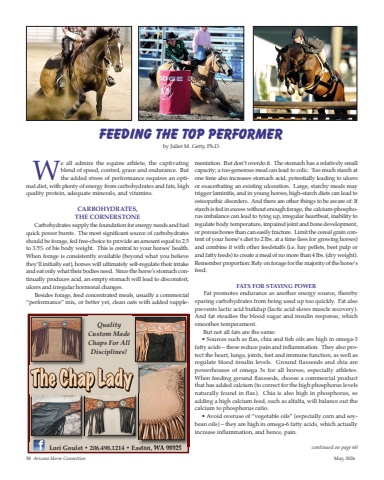
We all admire the equine athlete, the captivatingblend of speed, control, grace and endurance. Butthe added stress of performance requires an optimal diet, with plenty of energy from carbohydrates and fats, highquality protein, adequate minerals, and vitamins.CArbohydrAtEs, thE CornErstonECarbohydrates supply the foundation for energy needs and fuelquick power bursts. The most significant source of carbohydratesshould be forage, fed free-choice to provide an amount equal to 2.5to 3.5% of his body weight. This is central to your horses’ health.When forage is consistently available (beyond what you believethey’ll initially eat), horses will ultimately self-regulate their intakeand eat only what their bodies need. Since the horse’s stomach continually produces acid, an empty stomach will lead to discomfort,ulcers and irregular hormonal changes.Besides forage, feed concentrated meals, usually a commercial“performance” mix, or better yet, clean oats with added supplementation. But don’t overdo it. The stomach has a relatively smallcapacity; a too-generous meal can lead to colic. Too much starch atone time also increases stomach acid, potentially leading to ulcersor exacerbating an existing ulceration. Large, starchy meals maytrigger laminitis, and in young horses, high-starch diets can lead toosteopathic disorders. And there are other things to be aware of: Ifstarch is fed in excess without enough forage, the calcium-phosphorus imbalance can lead to tying up, irregular heartbeat, inability toregulate body temperature, impaired joint and bone development,or porous bones than can easily fracture. Limit the cereal grain content of your horse’s diet to 2 lbs. at a time (less for growing horses)and combine it with other feedstuffs (i.e. hay pellets, beet pulp orand fatty feeds) to create a meal of no more than 4 lbs. (dry weight).Remember proportion: Rely on forage for the majority of the horse’sfeed.FAts For stAyinG PoWErFat promotes endurance as another energy source, therebysparing carbohydrates from being used up too quickly. Fat alsoprevents lactic acid buildup (lactic acid slows muscle recovery).And fat steadies the blood sugar and insulin response, whichsmoothes temperament.But not all fats are the same:• Sources such as flax, chia and fish oils are high in omega-3fatty acids – these reduce pain and inflammation. They also protect the heart, lungs, joints, feet and immune function, as well asregulate blood insulin levels. Ground flaxseeds and chia arepowerhouses of omega 3s for all horses, especially athletes.When feeding ground flaxseeds, choose a commercial productthat has added calcium (to correct for the high phosphorus levelsnaturally found in flax). Chia is also high in phosphorus, soadding a high calcium feed, such as alfalfa, will balance out thecalcium to phosphorus ratio.• Avoid overuse of “vegetable oils” (especially corn and soybean oils) – they are high in omega-6 fatty acids, which actuallyincrease inflammation, and hence, pain.Feeding the Top Performerby Juliet M. Getty, Ph.D.58 Arizona Horse Connection May, 2026Quality Custom MadeChaps For AllDisciplines!Lori Goulet • 206.498.1214 • Easton, WA 98925 continued on page 60


