


Page 56 - Demo
P. 56
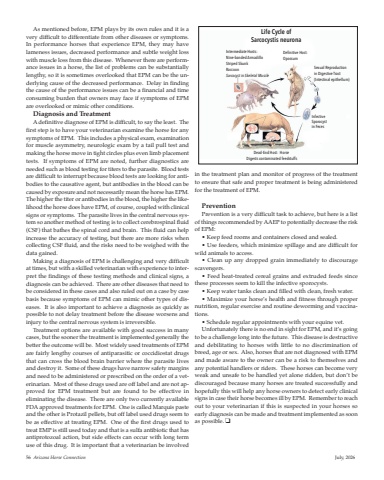
As mentioned before, EPM plays by its own rules and it is avery difficult to differentiate from other diseases or symptoms.In performance horses that experience EPM, they may havelameness issues, decreased performance and subtle weight losswith muscle loss from this disease. Whenever there are performance issues in a horse, the list of problems can be substantiallylengthy, so it is sometimes overlooked that EPM can be the underlying cause of the decreased performance. Delay in findingthe cause of the performance issues can be a financial and timeconsuming burden that owners may face if symptoms of EPMare overlooked or mimic other conditions.Diagnosis and TreatmentA definitive diagnose of EPM is difficult, to say the least. Thefirst step is to have your veterinarian examine the horse for anysymptoms of EPM. This includes a physical exam, examinationfor muscle asymmetry, neurologic exam by a tail pull test andmaking the horse move in tight circles plus even limb placementtests. If symptoms of EPM are noted, further diagnostics areneeded such as blood testing for titers to the parasite. Blood testsare difficult to interrupt because blood tests are looking for antibodies to the causative agent, but antibodies in the blood can becaused by exposure and not necessarily mean the horse has EPM.The higher the titer or antibodies in the blood, the higher the likelihood the horse does have EPM, of course, coupled with clinicalsigns or symptoms. The parasite lives in the central nervous system so another method of testing is to collect cerebrospinal fluid(CSF) that bathes the spinal cord and brain. This fluid can helpincrease the accuracy of testing, but there are more risks whencollecting CSF fluid, and the risks need to be weighed with thedata gained.Making a diagnosis of EPM is challenging and very difficultat times, but with a skilled veterinarian with experience to interpret the findings of these testing methods and clinical signs, adiagnosis can be achieved. There are other diseases that need tobe considered in these cases and also ruled out on a case by casebasis because symptoms of EPM can mimic other types of diseases. It is also important to achieve a diagnosis as quickly aspossible to not delay treatment before the disease worsens andinjury to the central nervous system is irreversible.Treatment options are available with good success in manycases, but the sooner the treatment is implemented generally thebetter the outcome will be. Most widely used treatments of EPMare fairly lengthy courses of antiparasitic or coccidiostat drugsthat can cross the blood brain barrier where the parasite livesand destroy it. Some of these drugs have narrow safety marginsand need to be administered or prescribed on the order of a veterinarian. Most of these drugs used are off label and are not approved for EPM treatment but are found to be effective ineliminating the disease. There are only two currently availableFDA approved treatments for EPM. One is called Marquis pasteand the other is Protazil pellets, but off label used drugs seem tobe as effective at treating EPM. One of the first drugs used totreat EMP is still used today and that is a sulfa antibiotic that hasantiprotozoal action, but side effects can occur with long termuse of this drug. It is important that a veterinarian be involvedin the treatment plan and monitor of progress of the treatmentto ensure that safe and proper treatment is being administeredfor the treatment of EPM.PreventionPrevention is a very difficult task to achieve, but here is a listof things recommended by AAEP to potentially decrease the riskof EPM:%u2022 Keep feed rooms and containers closed and sealed.%u2022 Use feeders, which minimize spillage and are difficult forwild animals to access.%u2022 Clean up any dropped grain immediately to discouragescavengers.%u2022 Feed heat-treated cereal grains and extruded feeds sincethese processes seem to kill the infective sporocysts.%u2022 Keep water tanks clean and filled with clean, fresh water.%u2022 Maximize your horse%u2019s health and fitness through propernutrition, regular exercise and routine deworming and vaccinations.%u2022 Schedule regular appointments with your equine vet.Unfortunately there is no end in sight for EPM, and it%u2019s goingto be a challenge long into the future. This disease is destructiveand debilitating to horses with little to no discrimination ofbreed, age or sex. Also, horses that are not diagnosed with EPMand made aware to the owner can be a risk to themselves andany potential handlers or riders. These horses can become veryweak and unsafe to be handled yet alone ridden, but don%u2019t bediscouraged because many horses are treated successfully andhopefully this will help any horse owners to detect early clinicalsigns in case their horse becomes ill by EPM. Remember to reachout to your veterinarian if this is suspected in your horses soearly diagnosis can be made and treatment implemented as soonas possible. o56 Arizona Horse Connection July, 2026Life Cycle ofSarcocystis neuronaIntermediate Hosts:Nine-banded ArmadilloStriped SkunkRaccoonSarcocyst in Skeletal MuscleDefinitive Host:OpossumSexual Reproductionin Digestive Tract(Intestinal epithellum)Infective Sporocystin FecesDead-End Host: HorseDigests contaminated feedstuffs


